

Five Pillars of Architectural Vocabulary, Delivered Weekly on Sundays

Welcome back to “The Five Orders,” our weekly series where we expand your architecture vocabulary 5 terms at a time. This week we are going to be covering compositional terms integral to architectural theory. These are: proportion, massing, contrast, symmetry, and rhythm. I hope you’ll like, share, and subscribe if you enjoyed reading!


The Five Orders
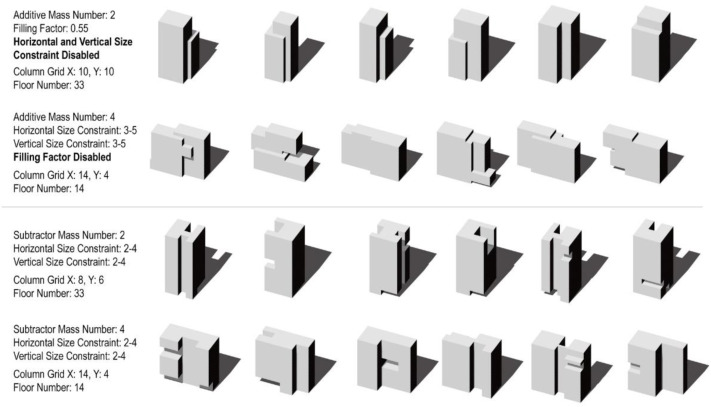
- Massing: Massing in architecture refers to the perception of the shape, form, size, and general layout of a building. It describes how a building’s volumes take up space. Some buildings emphasize vertical massing, such as skyscrapers. These buildings feature slender, tall proportions. Other buildings have more horizontal massing, such as shopping malls. These buildings prioritize low profiles and vast open areas. Progressions in technology, such as steel frames, have allowed for more dynamic building massing, enabling more complex forms not beholden to traditional load-bearing limits.

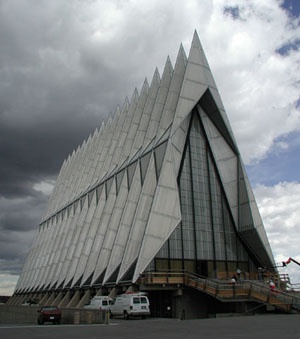
- Rhythm: Rhythm in architecture is similar to rhythm in music. It is commonly defined as “a unifying movement characterized by a patterned repetition or alteration of formal elements or motifs in the same or a modified form.” This expression appears in repetitions of lines, shapes, forms, colors, or any other visual aspect of a building. A good example is Gothic church ceilings. Rib vaults, for instance, have a linear, interlocking pattern that repeats from the back to the front of the church. These intervals create a feeling of continuity and provide a natural flow to the building. They also foster recognition in the observer, as they are likely to pay more attention to repetitive architectural elements.

- Symmetry: In architecture, symmetry is portrayed as a balanced distribution and arrangement of various components of a building, such as spaces and forms, on the two opposite sides of a central line. These two sides always reflect each other, thus acting as a mirror image of the other.

- Contrast: Contrast in architecture is the juxtaposition of opposing design elements. This creates intrigue and visual hierarchy, though it has the potential for aesthetic dissonance. An example of this is the Louvre Pyramid which is very modern compared to its more classical surroundings.

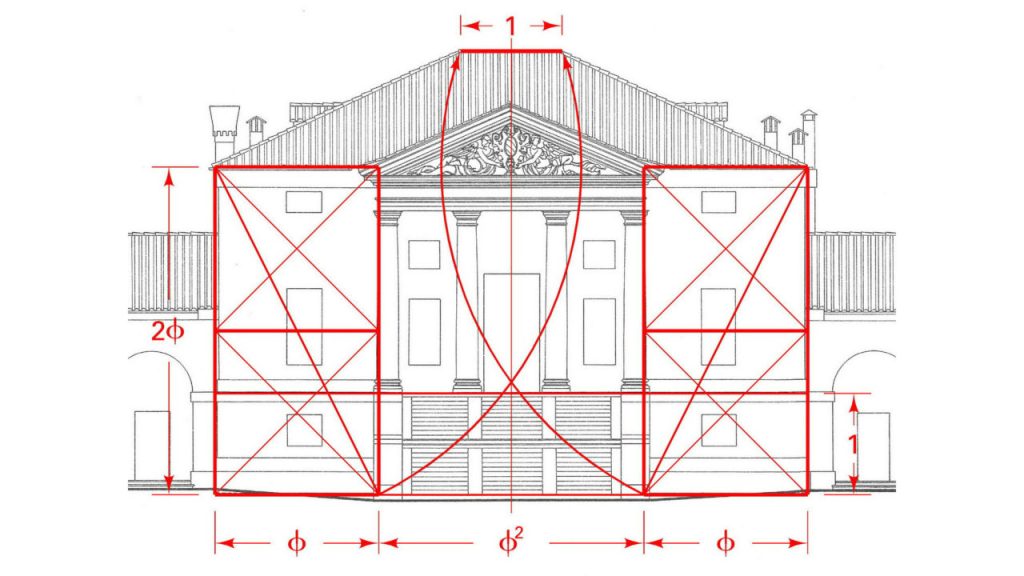
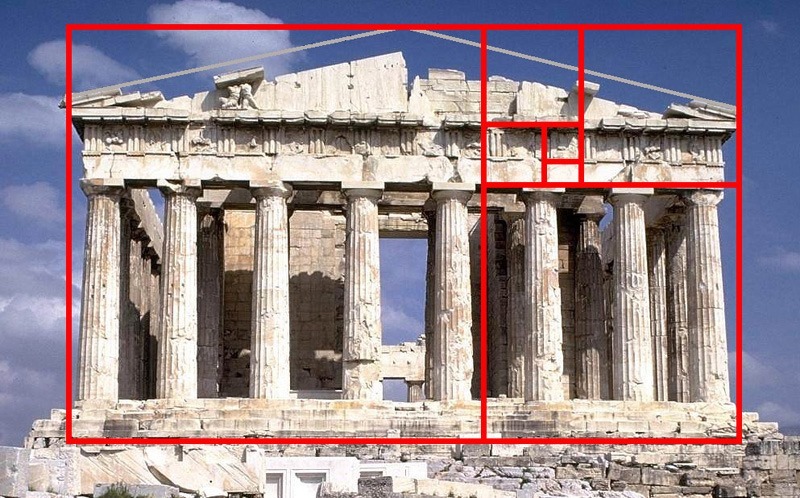
- Proportion: Proportion in architecture refers to the relationship between the different parts or elements of a design, such as the relationship between the height and width of a building, the size of windows and doors, the height of a room, etc.
Sources
Chicago Architecture Center. “Massing.” Architecture Encyclopedia, Chicago Architecture Center, https://www.architecture.org/online-resources/architecture-encyclopedia/massing.
Gharpedia. “Importance of Rhythm in Architecture.” Gharpedia, https://gharpedia.com/blog/importance-of-rhythm-in-architecture/.
İllustrarch. “The Importance of Proportion and Scale.” İllustrarch, 26 Sept. 2022, https://illustrarch.com/articles/16033-the-importance-of-proportion-and-scale.html.
Birkes Builders. “Contrast in Architecture: What Is It and What Impact Does It Have?” Birkes Builders, https://www.birkesbuilders.com/blog/all/contrast-in-architecture-impact.
Jonite Insights. “The Art of Symmetry in Architecture.” Jonite Insights, https://insights.jonite.com/the-art-of-symmetry-in-architecture.
“Symmetry in Architecture | Definition, Types & Examples.” Study.com, https://study.com/academy/lesson/symmetry-in-architecture.html.:contentReference[oaicite:1]{index=1}
“Proportion in Architecture.” Archi-Monarch, https://archi-monarch.com/proportion-in-architecture/.
 De Architectura
Leave a comment