

Five Pillars of Architectural Vocabulary, Delivered Weekly on Sundays
Welcome back to week 4 of The Five Orders! This week we are going to be covering 5 masonry terms to deepen your knowledge of the craft. The terms are: rustication, ashlar, coursing, voussoir, and quoin. If you don’t recognize one or multiple of these terms than keep reading. If you enjoy, make sure to like, share, and subscribe to De Architectura for more posts on architecture and architectural vocab!


The Five Orders
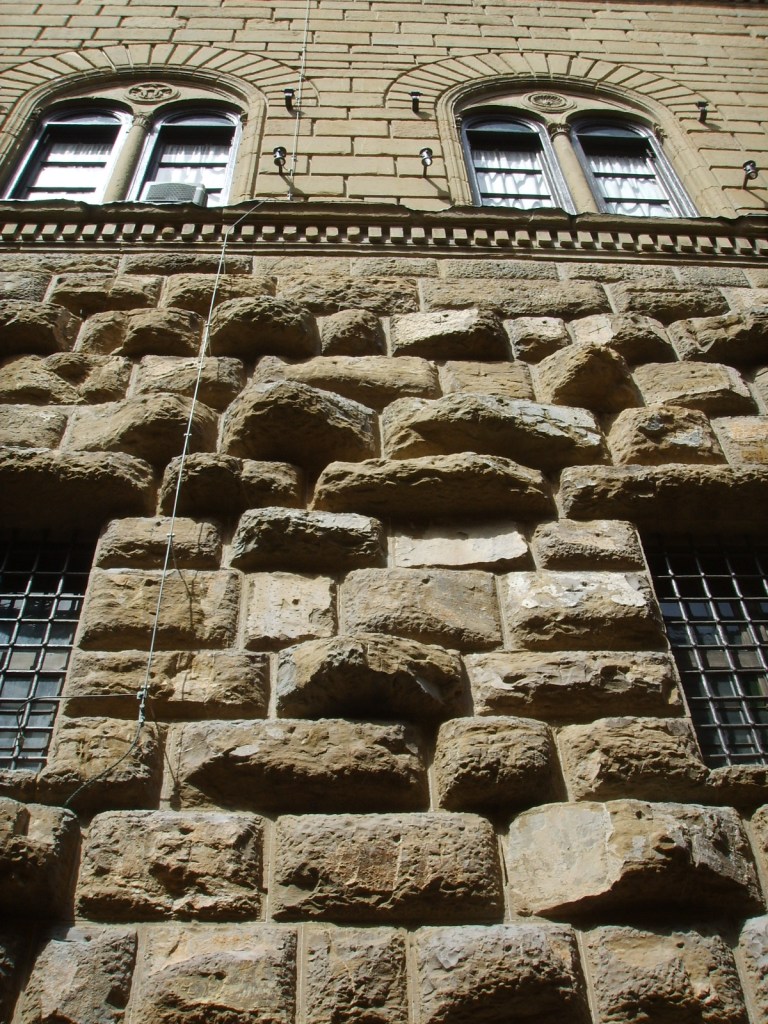
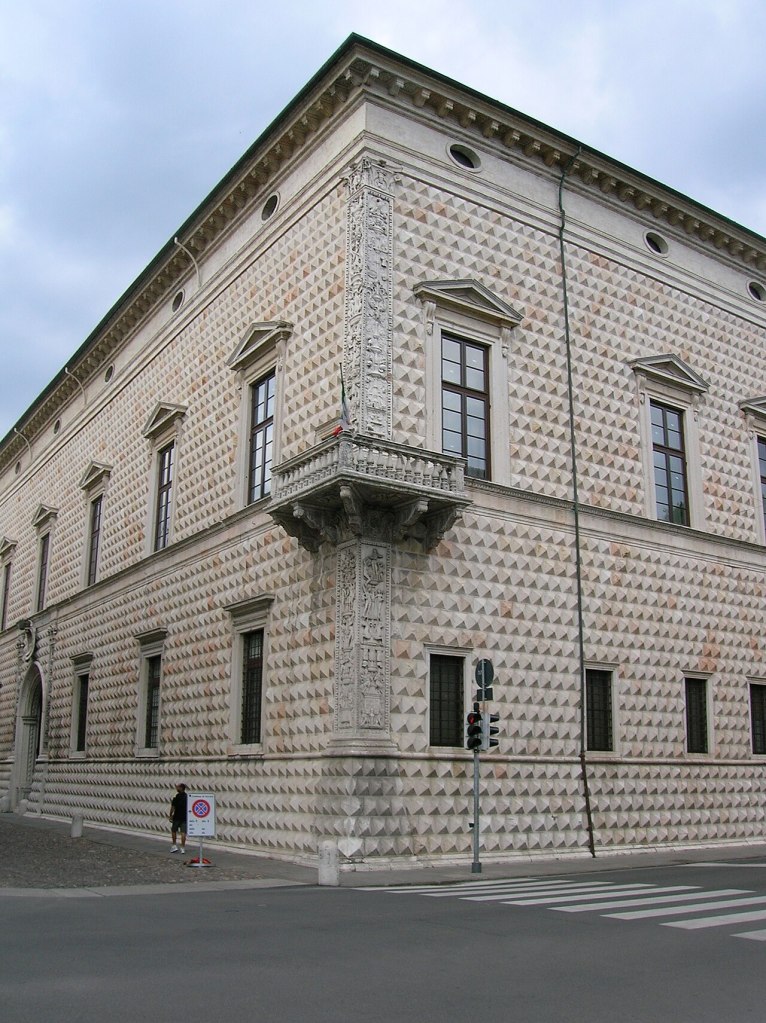
- Rustication: Rustication is masonry cut into massive blocks separated by joints. It is used to give texture to exterior walls and facades and is often employed on the lower portions of buildings. There are different styles (smooth, cyclopean, diamond-pointed, vermiculated, etc.) which all give different effects. Cyclopean, for example, is rough-hewn, giving a natural appearance as these stones are often taken directly from the quarry.
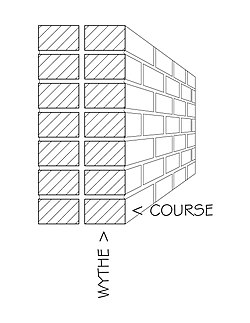
- Coursing: Coursing is the horizontal arrangement of equivalent units of masonry (bricks, stone, etc) for the purpose of structural stability and aesthetic rhythm. Coursing is often used for the construction of walls or otherwise horizontally oriented facades.

- Ashlar: Ashlar is a cut and dressed stone, chiseled to achieve a particular form. It is the finest masonry unit and was described by Vitruvius himself as “Opus Isodomum,” or “work of equal height.” Ashlar, typically rectangular in shape and smooth in appearance, can be coursed. It was typically used as an alternative to brick or a contrast to rusticated masonry. A famous building with Ashlar is the Palace of Versailles which used limestone ashlar on much of its exterior.

- Quoin: Quoins are masonry blocks placed at the corner of a wall. They often provide structural support, commonly to buildings constructed of rubble or inferior stone. Other times they are just used to add aesthetic appeal and contrast to a corner of a building.

- Voussoir:A voussoir is a wedge-shaped stone or brick used in building arches or vaults. These blocks are key to the structural stability of curved forms, as their angled sides fit together well, allowing them to transfer compressive forces along the curve down to the supports.

Sources
Curl, James Stevens. A Dictionary of Architecture and Landscape Architecture. 2nd ed., Oxford University Press, 2007.
 De Architectura
Leave a comment