

Five Pillars of Architectural Vocabulary, Delivered Weekly on Sundays
Welcome back to The Five Orders! This week we are going to be covering 5 modernist architectural features. They are: pilotis, curtain wall, free plan, ribbon windows, and flat roof. If you don’t know one or more of these terms than keep reading. Make sure to like, comment, and subscribe to De Architectura for more architectural vocab every week!



The Five Orders
- Pilotis: Pilotis are slender columns or stilts that lift a building above the ground. They also free up space that would have been occupied by traditional load-bearing walls. This provides extra room for gardens, pathways, and extra circulation. Additionally, they make buildings appear less imposing and lighten their massing. They are one of Le Corbusier’s Five Points of Architecture.

- Ribbon Windows: Ribbon windows are continuous horizontal bands that stretch across a facade. These long windows give a building horizontal emphasis. They also allow natural light to pour in, enlivening a space and enhancing user experience. It is another of Le Corbusier’s Five Points of Architecture.

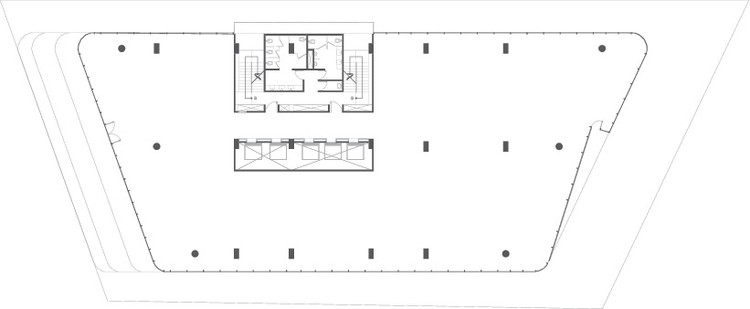
- Free Plan: The free plan is an open-floor plan that removes the need for interior load-bearing walls. Instead, it uses supports like pilotis. The free plan allows for flexible configurations of interior space and is one of Le Corbusier’s Five Points.
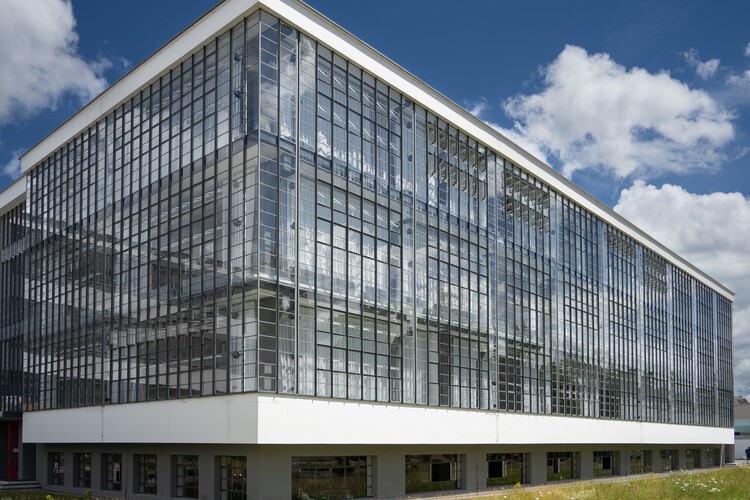
- Curtain Wall: Curtain walls are non-load bearing outer walls made of lightweight material. They are commonly made of glass or metal, and they hang off of a building’s structural frame. They carry no structural weight, instead they serve to protect the interior of the building from outside elements. They are not one of the Five Points but are just as important.
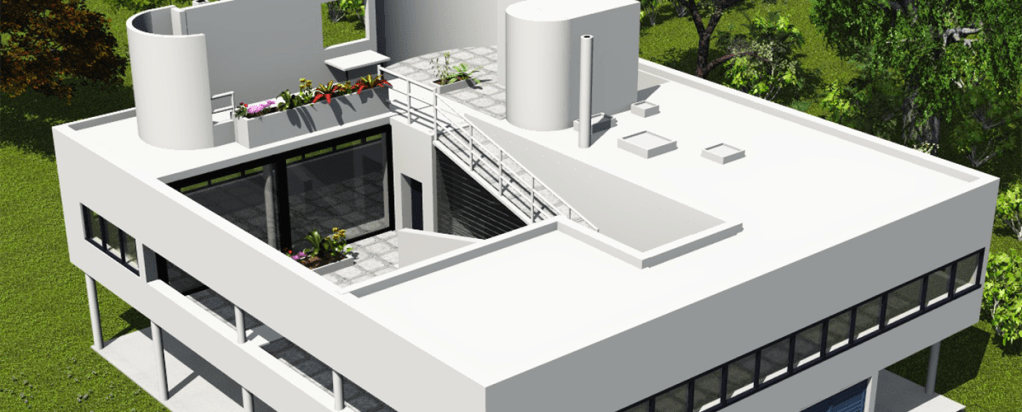
- Flat Roof:The flat roof is a replacement for the traditional pitched roof. It features a clean horizontal surface and can be used for a terrace, garden, or outdoor living space. It provides greater utility for the roof space which is commonly not used. It is one of Le Corbusier’s Five Points.
Sources
Curl, James Stevens. A Dictionary of Architecture and Landscape Architecture. 2nd ed., Oxford University Press, 2007.
 De Architectura
Leave a comment